Join us for the Immersive
Assistive Technology Expo
The world’s first 100% virtual Assistive Technology Expo
Registration now open for exhibitors and delegates. Places are limited for both, so don't miss out an sign up today!



About IMATEx
ImATEx is the world’s first 100% virtual Assistive Technology Expo - built to bring the energy, discovery, and practical problem-solving of a major AT exhibition to anyone, anywhere, without the barriers of travel, cost, or location.
Step into a digital expo hall designed to feel familiar and easy to navigate, whether you’re a professional searching for solutions, a family member supporting a loved one, an educator, a therapist, a care provider, or an AT user exploring what’s possible.
You can meet AT vendors in real time, ask questions on the spot, request demos, compare options, and get practical guidance about features, compatibility, pricing routes, and implementation.
It’s a faster, friendlier way to connect: no crowded aisles, no missed conversations, and no hidden and expensive costs.
ImATEx: the virtual expo where assistive technology meets real-time connection.
Premium Exhibitors
Our Premium Exhibitors are leading organisations showcasing innovative assistive technology and solutions across ImATEx.
Discover SpeakyAI, enabling meaningful conversations with web pages, apps, documents, images and messages through a smartphone.
Workplace adjustments, accessibility services, and education innovations create opportunity and inclusion.
Discover Morphic and Learn and Try, making accessibility features and assistive technology easier to find and use.
Our Featured Exhibitors are bringing a diverse range of assistive technology products, services and expertise to ImATEx.
Symbol software to support learning and communication.
Genio makes beautifully simple learning tools that help students stay engaged, keep up and succeed.
Co-designed with teachers and therapists, Cosmo supports holistic skill development through play-centred, inclusive learning.
Sixth Sense is a wearable navigational aid and app co-designed with visually impaired people to improve their freedom of travel.
Discover MyEcc Prop and MyEcc Pupil Prop, enabling eye-controlled wheelchair driving through AAC devices and sensor glasses.
A professional membership association for individuals and companies working in accessibility.
Join us for the opening remarks and thoughts at the start of this amazing day
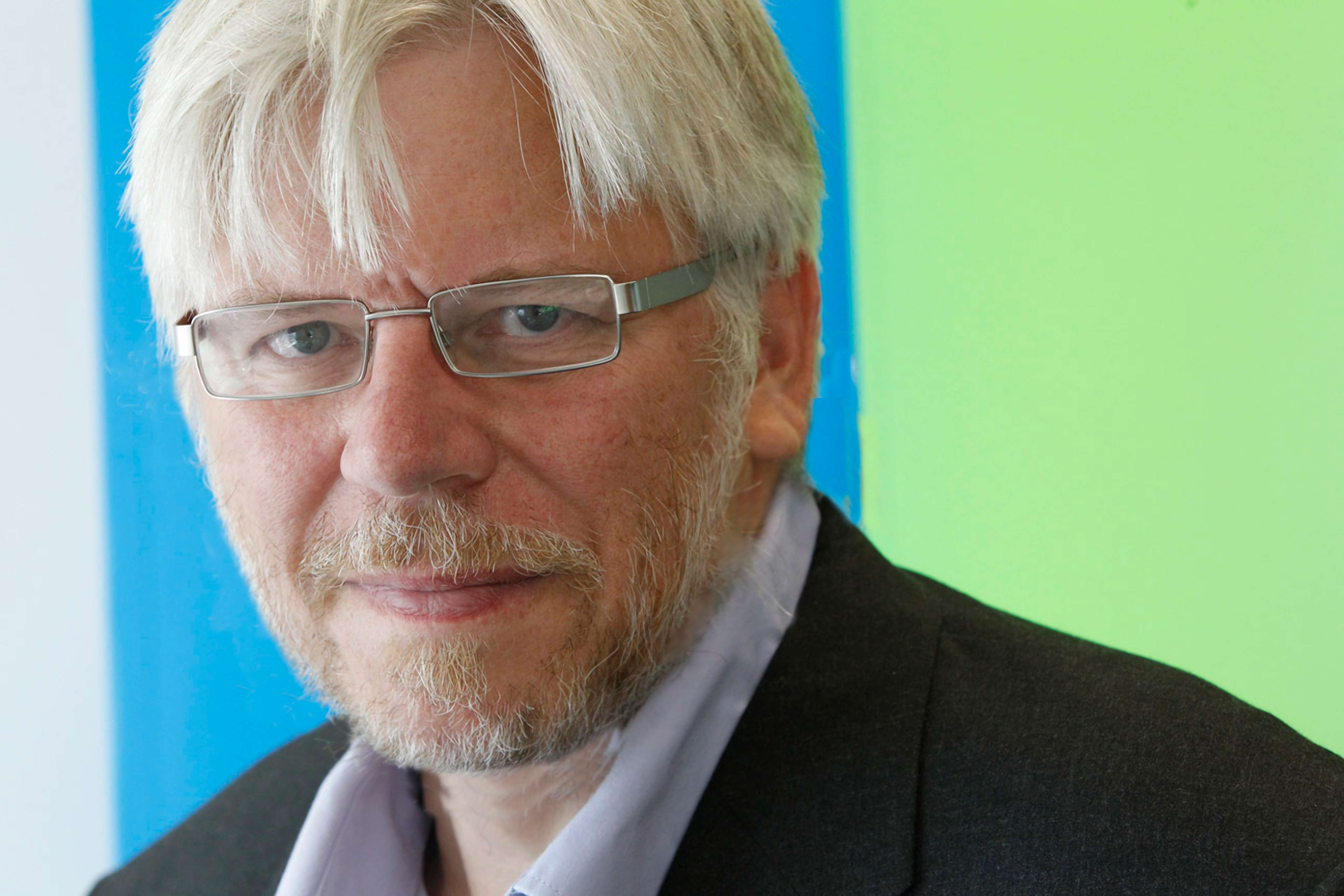
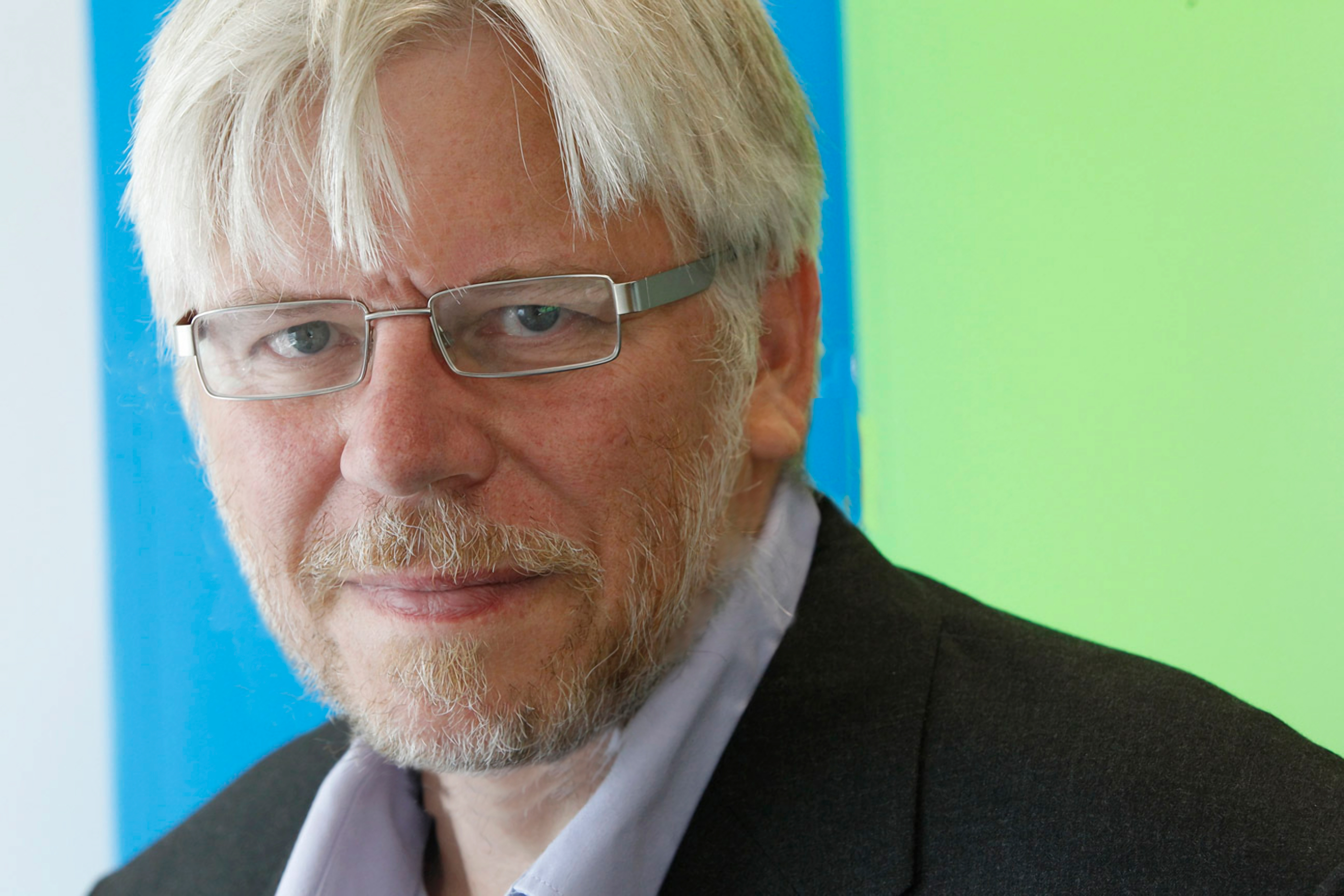
David Banes
Equitable AI Alliance and Access and Inclusion Services
Equitable AI Alliance and Access and Inclusion Services
David Banes is the Chair of the Equitable AI Alliance, Director of Access and Inclusion Service, and founder of Global Symbols. With a career in leading innovation in accessibility and assistive technology services in Europe and the Middle East, he also supports the development of emerging technologies and innovations. Globally, he works to facilitate the implementation of AI and assistive and accessible technologies from policy to practice, including AI for communication, mobility, and education in the workplace. His goal is to highlight how to unlock the potential and mitigate risks in the development and deployment of AI.

Antony Ruck
Co-founder and CEO of Aventido Limited, Aventido
Co-founder and CEO of Aventido Limited, Aventido
He is co-founder and CEO of Aventido Limited and has held several influential positions within the AT sector. His contributions include volunteer work with the British Standards Institution, co-creating ATEC (the Assistive Technology Exhibition and Conference), serving as Chair of the British Assistive Technology Association (BATA), and becoming the first co-Chair of DATEurope.
Elected Chair of BATA in 2015, Antony represented a broad membership spanning AT publishers and manufacturers, service providers, assessors, trainers, users and major organisations. During his tenure, he supported BATA's work advocating for the rights and interests of people who need assistive technology, including collaboration with UK Government departments.
Recognising the evolving commercial and political landscape across Europe, Antony worked with colleagues across the UK, Germany, Austria, Switzerland and Italy to establish DATEurope, representing the digital assistive technology industry at a European level.
Antony is also an experienced speaker, presenting on developments in assistive technology and the wider AT industry at events including ATIA, BETT, ATEC, OneCPD, NNAC, ATF Switzerland and the Workplace Health and Wellbeing Show.
This presentation introduces two products developed by Mediavoice: the SpeakyAI App and the SpeakyAI Smart Glasses.
The SpeakyAI App is a conversational accessibility interface for smartphones. It enables users to navigate and interact by voice with websites, applications and documents, including digital content that may be difficult or impossible to access through traditional screen readers.
The SpeakyAI Smart Glasses extend the same technology into a wearable, hands-free experience. Using the “Hey Speaky” wake-up keyword, users can activate SpeakyAI, access its services and control smartphone functions without handling the device.
Both products are powered by Mediavoice’s patented Inclusive AI SDK, protected in the EU, USA and UK. While the App provides the core conversational experience directly through the smartphone, the Smart Glasses make it available through an intuitive wearable interface for everyday use.
The presentation will focus particularly on blind and visually impaired users, while also showing the potential benefits for people with upper-limb motor disabilities and older adults.
Delegates will learn how conversational AI, inclusive voice technology and wearable devices can reduce digital barriers and support greater autonomy and participation.
Fabrizio Giacomelli
MediaVoice
MediaVoice
Fabrizio Giacomelli is the founder and CEO of Mediavoice S.r.l. and an entrepreneur with extensive experience in Artificial Intelligence, voice technologies and digital accessibility. A former Microsoft Certified Systems Engineer and IT Manager at Ernst & Young Consulting, he has been active in AI since 1988, when he was among the founders of the Italian Association for Artificial Intelligence. He holds degrees in Computer Engineering and Philosophy of Mind.
In 2000, he founded Mediavoice with the mission of using AI and voice technologies to bridge the digital divide and improve access to digital services for vulnerable groups, particularly blind and visually impaired people, older adults and people facing accessibility barriers. At Mediavoice, he has coordinated and contributed to more than twenty R&D projects, including projects funded under FP7 and Horizon 2020.
Giacomelli is the inventor of several international patents and the author of numerous publications. His recent work includes the 2023 book Beauty Intelligence Consciousness – Beyond Humanity, published by Mimesis, and the paper A Definition of Intelligence, co-authored with philosopher of science Silvano Tagliagambe and presented at the 2024 World Congress of Philosophy.

Nicolamaria Manes
MediaVoice
MediaVoice
Nicolamaria Manes has been Chief Technology Officer of Mediavoice S.r.l. since 2001. He holds a degree in Computer Science from the University of Bologna and has participated in several research projects, including the Euroball project at the Italian National Institute of Nuclear Physics (INFN).
Throughout his professional career, he has designed and developed numerous hardware and software solutions based on speech technologies, including embedded speech applications for desktop and mobile devices. He has extensive expertise in Human-Computer Interaction, Voice User Interface design, web usability and accessibility, multimodal interaction systems and software architecture. He has also served as a contract professor at the University of Molise, teaching usability and accessibility.
Manes has more than twenty years of experience in information technology and extensive expertise in managing complex national and European R&D projects. His responsibilities have included technical coordination, software and system design, project management, reporting, monitoring and participation in project reviews. He has worked in multidisciplinary national and international teams, combining strong technical expertise with project management, communication and negotiation skills, and has contributed to the conception and implementation of numerous research and innovation projects.
Fabiana Spadetta
MediaVoice
MediaVoice
Fabiana Spadetta is the International Development Manager at Mediavoice S.r.l. and a key point of contact for the company’s international business development activities. She is responsible for supporting the internationalisation and market expansion of Mediavoice’s products and technologies, with particular focus on its AI-based and inclusive solutions.
Her activities include identifying new market opportunities, developing and managing relationships with international clients, organisations and strategic partners, supporting commercial and institutional negotiations, and coordinating international pilot, validation and partnership initiatives. She also contributes to the positioning and adaptation of Mediavoice’s solutions to different markets, user needs and business contexts.
Alongside her international development role, she has experience in ICT research, particularly in user needs analysis, functional requirements and digital accessibility, and contributes to national and European R&D projects.
Her profile combines technical understanding and expertise in accessibility with a strong focus on international relations, business development and the commercial exploitation of innovative technologies.
As organisations around the world seek to create more inclusive workplaces, the challenge is no longer simply understanding accessibility, but knowing how to implement effective support that delivers meaningful outcomes for employees and employers alike.
In this session, Nasser Siabi, CEO of Microlink Accessibility Solutions, will share practical insights from working with organisations across multiple sectors to improve workplace accessibility through assistive technology, workplace adjustments and specialist support services. Drawing on real-world experience, the presentation will explore how employers can better support neurodivergent individuals, people with musculoskeletal conditions, and employees with sensory, cognitive and physical disabilities.
The session will highlight current trends in workplace accessibility, the growing role of technology in removing barriers, and the importance of combining innovative solutions with expert human support. Attendees will gain an understanding of how organisations can create more inclusive, productive and sustainable working environments while meeting the diverse needs of their workforce.
The presentation will provide practical insights into workplace accessibility, emerging technologies and innovative approaches that can help create more inclusive environments and improve outcomes for individuals and organisations alike.

Nasser Siabi
CEO, Microlink PC (UK) Ltd
CEO, Microlink PC (UK) Ltd
Nasser Siabi is the CEO of Microlink PC (UK) Ltd, a company dedicated to helping disabled and neurodivergent people overcome barriers through technology, workplace adjustments and accessibility services. For many years, he has led the organisation's growth, combining commercial success with a genuine passion for inclusion and equal opportunity. Under Nasser's leadership, Microlink has built a strong reputation for supporting employers, educational institutions and public sector organisations, not only across the UK but also through partnerships and projects that extend internationally. He is a firm believer that accessible technology can transform lives, enabling people to participate fully in education, employment and society. Known for his forward-thinking approach, Nasser has consistently championed innovation, encouraging the development and adoption of solutions that create practical, lasting change for individuals and organisations alike. His ability to balance business strategy with social impact has helped position Microlink as a recognised leader in accessibility and workplace inclusion. At the heart of Nasser's work is a simple ambition: to create a world where everyone has the opportunity to fulfil their potential, regardless of disability or circumstance.
In this session, Rebecca Lynch, Global Symbols & Education Specialist, will explore how symbols can make environments more accessible and inclusive for everyone, and the positive impact this can have on communication, independence, and well-being.
Rebecca will conclude with a live demonstration of Widgit Online, showing how quickly and easily users can create a dual-language communication board to support understanding and inclusion across diverse communities.
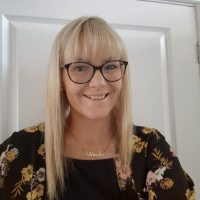
Rebecca Lynch
Widgit Software
Widgit Software
Rebecca brings over 14 years of teaching experience in both mainstream and special needs education, having worked in the UK and internationally. At Widgit, she plays a key role in developing educational resources that promote communication and interaction across the curriculum. Recently, Rebecca has focused on supporting international schools in meeting the needs of bilingual and multilingual learners, as well as working with organisations to implement the use of visuals in the wider world.
Join us as we explore the science of learning and delve into recent research on the impact of AI. We'll explain our approach to using AI and the role of "productive friction" within Genio Notes, and finish with a practical demonstration that showcases how Genio Notes uses AI to support, rather than replace, the learner.

Lee Chambers
Speaker, Genio
Speaker, Genio
With 19 years of experience in the assistive technology (AT) field, encompassing roles as an AT Trainer, Training Manager, and Product Specialist, Lee brings a deep, comprehensive expertise to Genio. Since joining Genio over eight years ago, Lee has been instrumental in managing and overseeing all aspects of the government-funded disability support schemes the company participates in. His primary responsibilities include managing the Disabled Students' Allowance (DSA) and Access to Work schemes in the UK and overseeing the company's involvement in Vocational Rehabilitation in the US and the Canadian Student Grant. Lee is an expert in all facets of Genio's product suite and works closely with Needs Assessors, AT Specialists, Disability Practitioners, and Universities across the UK, Ireland, the United States, and Canada. His collaboration ensures that these partners can effectively implement Genio's innovative solutions to empower students and professionals with disabilities.
Assistive technology is entering a new phase. For decades, AT has largely been designed to compensate for a defined impairment through a specific device or adaptation. Artificial intelligence is changing that model, enabling technologies that can learn, anticipate, personalise and respond dynamically to the needs, preferences and environments of individual users.
This keynote will explore how AI is reshaping the design and delivery of assistive technology, from intelligent communication and AAC systems to computer vision, speech technologies, smart mobility, environmental control and personalised interfaces. It will consider how generative and agentic AI could move AT beyond fixed functionality towards systems that adapt continuously and increasingly operate across mainstream devices and services.
But smarter technology does not automatically mean greater inclusion. The presentation will examine the risks of inaccessible design, biased data, privacy, loss of user control and over-reliance on automation. It will argue that disabled people must be active partners in designing, testing and governing emerging AI-enabled AT.
The future of AT will not simply be more intelligent devices. It will be technology that understands context, adapts to people rather than requiring people to adapt to technology, and combines AI innovation with accessibility, choice, dignity and human agency.
David Banes
Equitable AI Alliance and Access and Inclusion Services
Equitable AI Alliance and Access and Inclusion Services
David Banes is the Chair of the Equitable AI Alliance, Director of Access and Inclusion Service, and founder of Global Symbols. With a career in leading innovation in accessibility and assistive technology services in Europe and the Middle East, he also supports the development of emerging technologies and innovations. Globally, he works to facilitate the implementation of AI and assistive and accessible technologies from policy to practice, including AI for communication, mobility, and education in the workplace. His goal is to highlight how to unlock the potential and mitigate risks in the development and deployment of AI.
This session explores why readiness is the foundation of learning and how movement, sensory engagement and play can help children regulate, focus and participate. Attendees will discover practical, curriculum-aligned and inclusive strategies for creating learning environments where every child feels ready to engage and thrive.
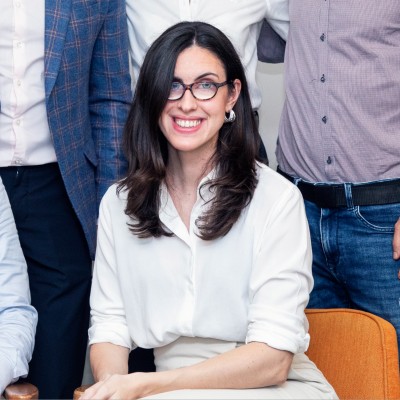
Ana Perez
Cosmo
Cosmo
Ana Pérez is Head of Marketing at Cosmo, where she works to make inclusive learning more accessible, engaging and practical for schools. She is passionate about disability inclusion and mental health, drawing on both professional expertise and lived experience. Through her work with educators, families and inclusion specialists, Ana advocates for learning environments that recognise different needs and enable every child to participate, connect and thrive.
This session will introduce an innovative eye-controlled driving solution for power wheelchairs, designed for individuals with severe physical disabilities who lack independent body and head movement. Participants will explore how users can safely and intuitively control mobility functions using only their eyes. The presentation will include real-world examples demonstrating increased independence and participation in daily life. Attendees will also learn about key clinical considerations, including user selection, setup and integration with communication devices. In addition, the session will highlight how modern eye-control systems perform reliably in indoor and outdoor environments and can be integrated with a wide range of power wheelchairs. Participants will leave with practical knowledge on implementing eye-controlled mobility solutions to improve quality of life and independence.
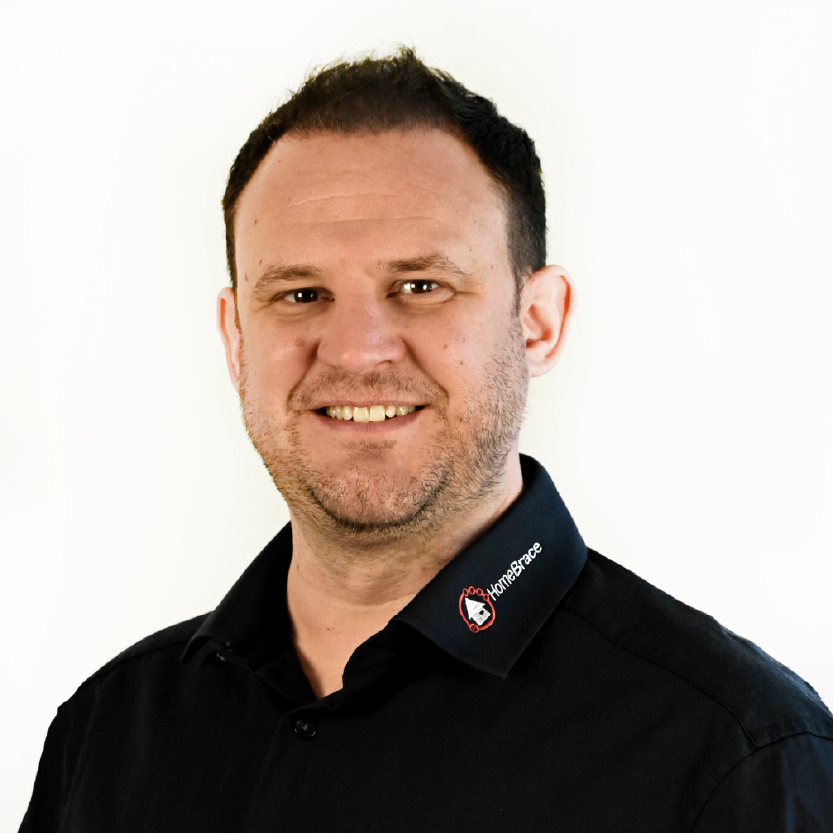
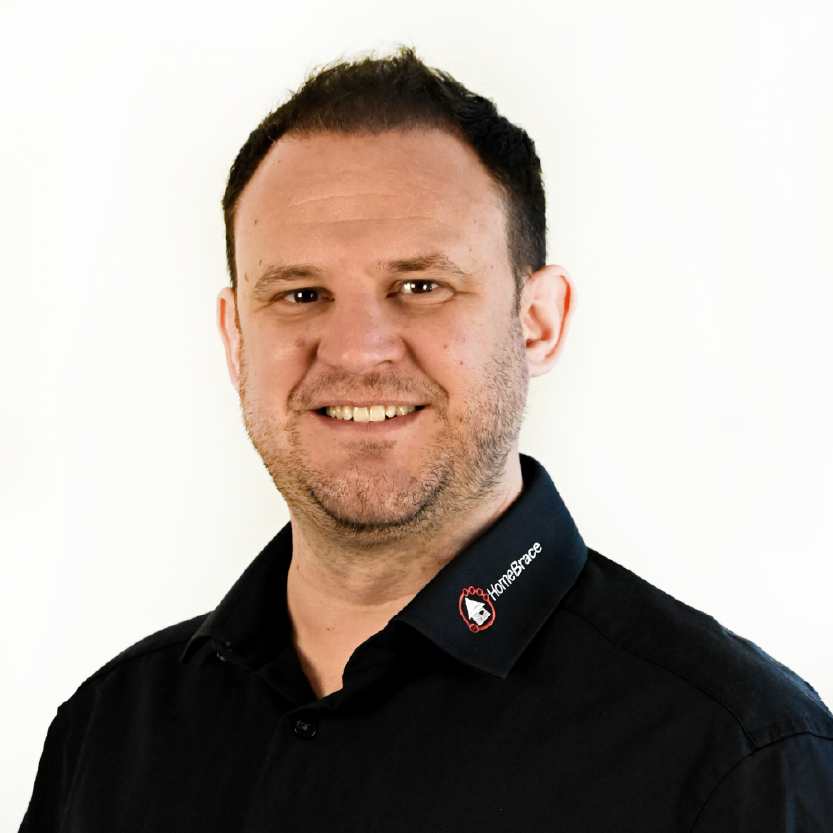
Pete Jones
Global Director of Commercial & Strategy , HomeBraceGermany GmbH
Global Director of Commercial & Strategy , HomeBraceGermany GmbH
Pete Jones is Global Director of Commercial & Strategy at HomeBrace, where he is responsible for international business development, strategic partnerships and commercial growth. With extensive experience in the assistive technology sector, he works closely with distributors, healthcare professionals and industry partners worldwide. His focus is on bringing innovative mobility and wheelchair control solutions to international markets and supporting technologies that improve independence for people with mobility impairments. At IMATEx, Pete will represent HomeBrace and share insights into the latest developments in alternative wheelchair control and assistive technology.
Technology is evolving quickly and having a colossal impact on rehabilitation. From artificial intelligence summaries of assessment data, to precision diagnostic tools, to therapeutic advances, the toolkit of the rehabilitation provider and AT supplier has changed drastically over a very short time. Options have also greatly expanded to enable individuals of all ages with disabilities and chronic conditions to have products and services tailored to their unique situations and to achieve lives of quality to an extent not possible until recently. In this context, we can be seen as moving beyond the Information Age to an Age of Individualization where ever more abundant technology options can make meeting individual needs and preferences more achievable. However, with choice can come choice overload. And with so many options available, it is crucial to select the option that meets the unique person’s needs and preferences while accounting for both constraints and supports in the physical and social environment as well as the available technology characteristics. While this is true for the individual users, it is also true for AT professionals and providers. Individualization within wider collaboration and integrative service delivery will largely determine individual success.

Marcia Scherer
President, Institute for Matching Person & Technology
President, Institute for Matching Person & Technology
Dr. Scherer is founding President of the Institute for Matching Person & Technology. She is also Professor of Physical Medicine and Rehabilitation, University of Rochester Medical Center, Editor-in-Chief of the journal Disability and Rehabilitation: Assistive Technology and Co-Editor of the CRC Press book series, Rehabilitation Science in Practice Series. Dr. Scherer developed the Matching Person and Technology (MPT) Model and assessments that are used globally to guide individualized technology selection and outcomes measurement. Marcia authored a trilogy of books describing the impact of various categories of technology devices and services on people’s life quality. She has authored, edited, or co-edited 12 other books. She and her collaborators have published 100 articles on disability and rehabilitation in peer-reviewed scientific journals, 58 published proceedings papers, and 43 book chapters. She served as co-convener of the World Health Organization’s 2017 global assistive technology summit which led to a set of journal articles fundamental in the World Health Organization’s General Assembly 2018 resolution to improve global access to assistive technology.
Assistive technology can be a powerful tool for independence and inclusion, but technology is only part of the accessibility equation. Creating truly inclusive digital experiences, products, services, and environments also requires people with the knowledge and skills to understand accessibility and put it into practice.
Join the International Association of Accessibility Professionals (IAAP) for an introduction to our global community and the resources available to help individuals and organizations build accessibility expertise. We'll explore professional education and learning opportunities, introduce IAAP's internationally recognized certification pathways, and discuss how certification can support professionals at different stages of their accessibility careers.
We'll also share how IAAP membership connects individuals and organizations with ongoing education, resources, and a worldwide network of accessibility professionals.
Whether you are an accessibility or assistive technology professional, educator, service provider, or simply interested in expanding your accessibility knowledge, discover how IAAP can help you take the next step.
Christopher M. Lee
CEO & President, Global Initiative for Inclusive ICTs (G3ict) , International Association of Accessibility Professionals (IAAP), a Division of G3ict
CEO & President, Global Initiative for Inclusive ICTs (G3ict) , International Association of Accessibility Professionals (IAAP), a Division of G3ict
This session will introduce a new free Learn & Try tool for quickly finding all 300+ accessibility solutions that exist today for any computer, tablet or phone. Over half are free. More than a third are already built in. And 9 out of 10 are free or free to try. The tool allows anyone (professional, parent, consumer) to quickly discover any and all tools available for an individual. It covers Windows, macOS, ChromebookOS, iOS, ipadOS, and Android. The tool is designed to allow everyone, including those from schools that have low resources and schools that do not have their own assistive technology professionals to be able to easily find computer & mobile accessibility tools for themselves or those they work with. Since 9 out of 10 are free, or free to try, users can have hands on experience before having to commit. Each entry includes a description of the tool/software/feature, a short video demonstrating it, and information on where to find it (if it is built-in), how to use it, and, if it is not already built-in, how to get it (free or commercial). As a bonus, using AI to create new tools without writing any code will be demonstrated.

Gregg Vanderheiden
Raising the Floor
Raising the Floor
Dr. Vanderheiden is the founder of the Trace Center, Professor emeritus of the Universities of Wisconsin-Madison and University of Maryland, and co-founder of non-profit Raising the Floor. He has been active in the field of technology and disability for over 55 years and was a pioneer in the field of Augmentative Communication (a term originating from his writings), assistive technology, and computer access. Access features developed by Dr. Vanderheiden and his team can be found in every computer and mobile device internationally (Windows, MacOS, iOS, Android, and Linux) as well as kiosks, ticket machines, and more. He has also been a long-time leader in web accessibility, creating the first Web Accessibility guidelines in 1995 and serving as co-editor and co-chairing the WCAG 1.0 and 2.0 Working Group from its inception in 1996 through 2013 and was the third recipient of the Yuri Rubinsky Memorial World Wide Web Award. His most recent work has focused on development of Morphic, AT-on-Demand and a completely different way to approach accessibility for next-next generation ICT. He's a past President and Fellow of RESNA, Founding Fellow of the American Institute of Medical and Biological Engineering (AIMBE) and Fellow in the Human Factors and Ergonomics society.
Hailing from Kenya, Brian grew up in School classrooms where all pupils, irrespective of ability, sat and learnt together, and this early exposure to people with disabilities drives Brian's long-term ambition to create a navigational aid that is accessible and affordable to people with sight loss worldwide.
Brian Mwenda started Hope Tech in 2016 with a vision of giving visually impaired people the independence and confidence to decide when and where they go. To realise this vision, Hope Tech is using the latest technologies to deliver Sixth Sense, a navigational aid co-designed with the visually impaired community to make their journeys independent and safe.
Sixth Sense is a stylish wearable that sits on your shoulders and an app for your phone that combine to offer a navigational aid for visually impaired people. It uses ultrasonic and infrared object detection, accessible mapping, audio prompts and haptics to keep users safely on course, wherever they want to go.
In this presentation, Brian Mwenda will chart the story of Hope Tech and Sixth Sense. Outlining Hope Tech's extensive research and testing journey and how Sixth Sense has evolved through a number of different form factors into its optimal form of a mobile phone app and neckband wearable.

Brian Mwenda
Hope Tech Plus
Hope Tech Plus
Brian Mwenda is an assistive technology innovator and disability inclusion advocate with over a decade of experience designing, researching, and deploying products and services for people with disabilities. He is the Founder and CEO of Hope Tech, a UK-based company behind Sixth Sense, a groundbreaking mobility aid for blind and visually impaired people, developed through half a decade of co-design, research and global user trials.
Brian also leads Hope Tech Insights Austria, an organisation focused on advancing digital accessibility across Europe, and is the founding director of Senses Hub in Nairobi, Kenya one of Africa's most impactful accessibility innovation and research centres. With a vision of fostering a more inclusive society, he is not merely developing innovative assistive devices, but pioneering a shift in how the world perceives and interacts with the visually impaired community.
His work with Hope Tech has been recognized through the Royal Academy of Engineering's Africa Prize for Engineering Innovation; the Leaders in Innovation Fellowship; the Diversity & Inclusion Award for Best Use of Technology; and Forbes Under 30 Europe for Social Impact in 2025.
Join is to close the day and share any final questions or thoughts
David Banes
Equitable AI Alliance and Access and Inclusion Services
Equitable AI Alliance and Access and Inclusion Services
David Banes is the Chair of the Equitable AI Alliance, Director of Access and Inclusion Service, and founder of Global Symbols. With a career in leading innovation in accessibility and assistive technology services in Europe and the Middle East, he also supports the development of emerging technologies and innovations. Globally, he works to facilitate the implementation of AI and assistive and accessible technologies from policy to practice, including AI for communication, mobility, and education in the workplace. His goal is to highlight how to unlock the potential and mitigate risks in the development and deployment of AI.
Antony Ruck
Co-founder and CEO of Aventido Limited, Aventido
Co-founder and CEO of Aventido Limited, Aventido
He is co-founder and CEO of Aventido Limited and has held several influential positions within the AT sector. His contributions include volunteer work with the British Standards Institution, co-creating ATEC (the Assistive Technology Exhibition and Conference), serving as Chair of the British Assistive Technology Association (BATA), and becoming the first co-Chair of DATEurope.
Elected Chair of BATA in 2015, Antony represented a broad membership spanning AT publishers and manufacturers, service providers, assessors, trainers, users and major organisations. During his tenure, he supported BATA's work advocating for the rights and interests of people who need assistive technology, including collaboration with UK Government departments.
Recognising the evolving commercial and political landscape across Europe, Antony worked with colleagues across the UK, Germany, Austria, Switzerland and Italy to establish DATEurope, representing the digital assistive technology industry at a European level.
Antony is also an experienced speaker, presenting on developments in assistive technology and the wider AT industry at events including ATIA, BETT, ATEC, OneCPD, NNAC, ATF Switzerland and the Workplace Health and Wellbeing Show.
Our exhibitors represent a wide range of organisations, solutions and expertise from across the assistive technology and accessibility sectors.
Assistive and educational technology, specialising in mechanical keyboards made for children and people with special needs.
An organization with people who are enthusiastic about the possibilities of (robot) technology.
Ability Drive is an alternative control interface that enables you to control a powered wheelchair with your eyes.
Control all your Home Automation devices with Voicemate.
Innovating in digital accessibility, the startup company Key2Enable (also operating in Brazil as Geraes Tecnologia Assistiva) empowers people with disabilities to develop their skills and individualities.
Enable Ireland provides services to over 13,000 children and adults with disabilities and their families from over 40 locations in 14 counties.
Voiceitt has developed speech recognition for non-standard speech: opening the world of voice technology for people with speech disabilities, aging adults, and accented speakers.
Solutions for learning, working and building confidence, including Pro-Study, Lernabl, Study Agent, Tau XL, Pro-Workspace and STAT Northern.
For over half a century we have been at the forefront of supplying advanced Assistive Technology (AT) and Telecare to help disabled people and the elderly live more Independently.
Accessible Surveys adapts to the individual needs and preferences of the diversity of respondents, presenting questions in a range of ways that best suit the person answering the survey.
Visualize Your Thinking for Academic, Workplace and Personal Success
YetiCare fosters a meaningful everyday life and motivates users to engage in cognitive and physical activity.
Cboard is an open-source app for children and adults with speech and language impairments, aiding communication with symbols and text-to-speech.
Association of Assistive Technology Act Programs (ATAP) facilitates the coordination of state and territory AT Act Programs nationally and provides technical assistance and support to its members.
An accessible research platform for university students with disabilities, learning differences, or anyone who benefits from a more supportive reading and study experience.
The HouseMate device compensates for a person’s injury, impairment or disability by enabling them to remotely control appliances in their environment and attain a level of independence that would otherwise be impossible.
A simple, screen-free way for young children to be understood, at home and on the go.
Our mission is to ENGAGE with special needs communities, to EDUCATE to the possibilities, and to EMPOWER people throughout the world with tools and knowledge to support their community’s access to communication and learning.
The AsTeRICS Foundation develops various assistive tools together with end users and provides resources for do-it-yourself (DIY-) solutions.
For PRD, assisted communication means much more than the provision of communication aids. For us, supported communication is lived encounters at eye level.
A supportive community for families and professionals. The Logan® ProxTalker® is the most advanced and adaptable recorded speech communication device available.
The Institute for Matching Person & Technology was formed to better match users of technologies with the most appropriate devices for their use.
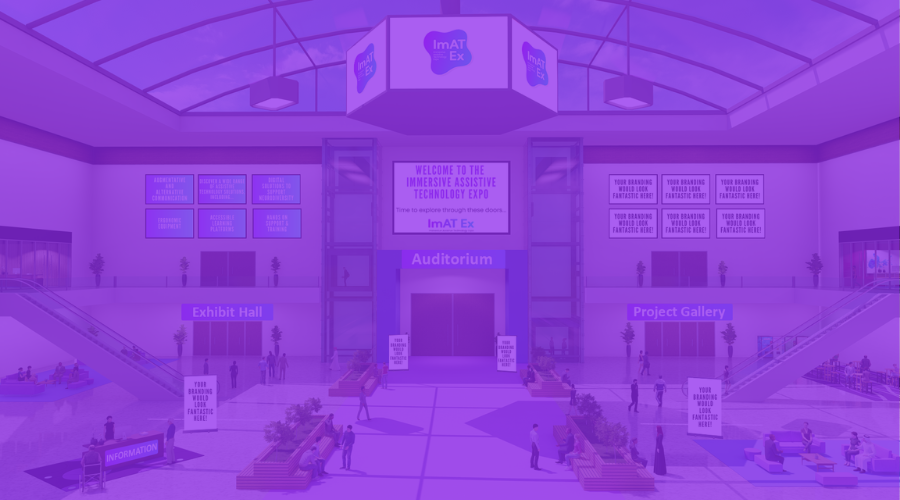
Take a look at our virtual exhibition space
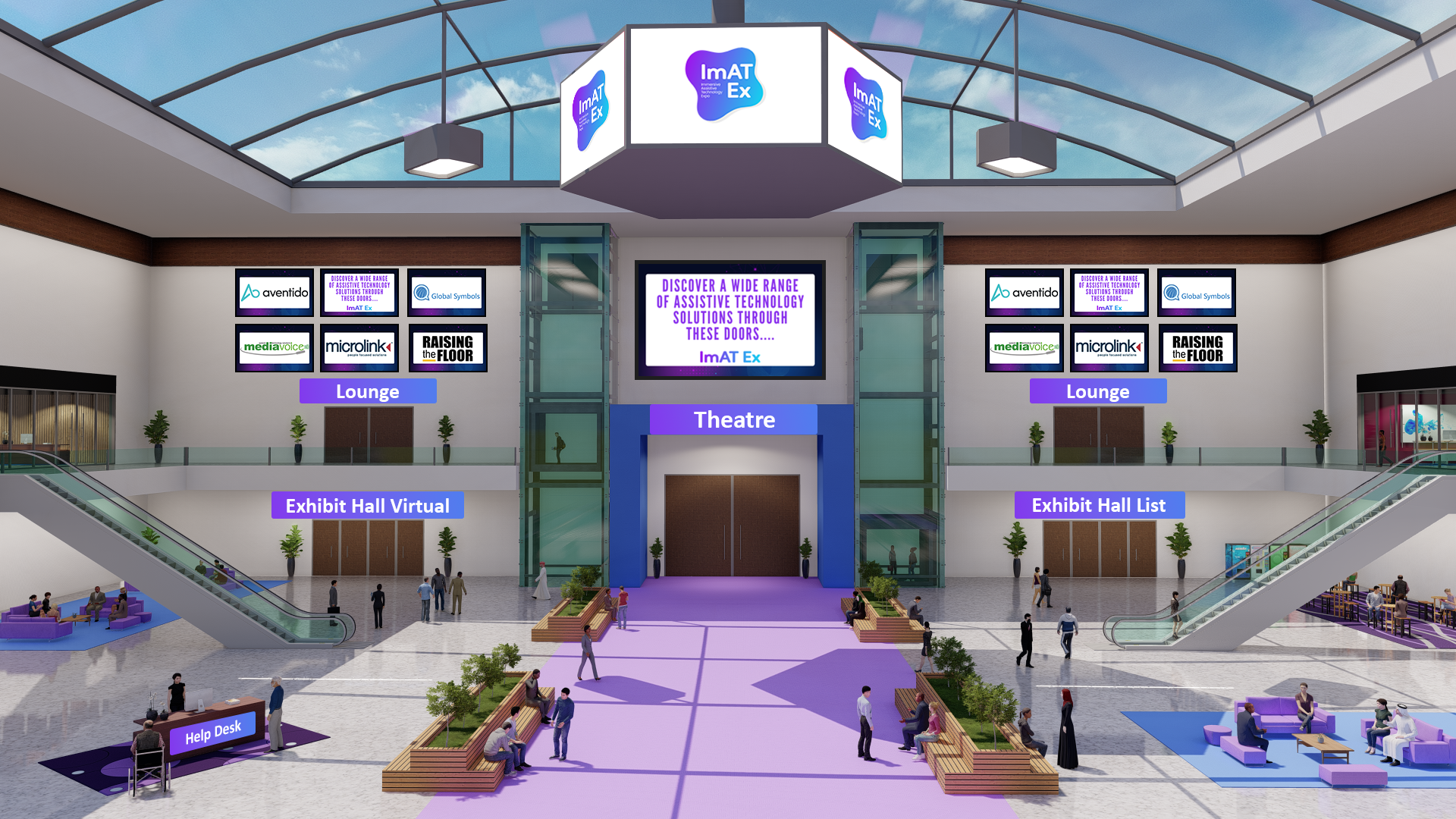
The lobby is the first place delegate will visit, which makes it a great opportunity to promote your company and solutions.
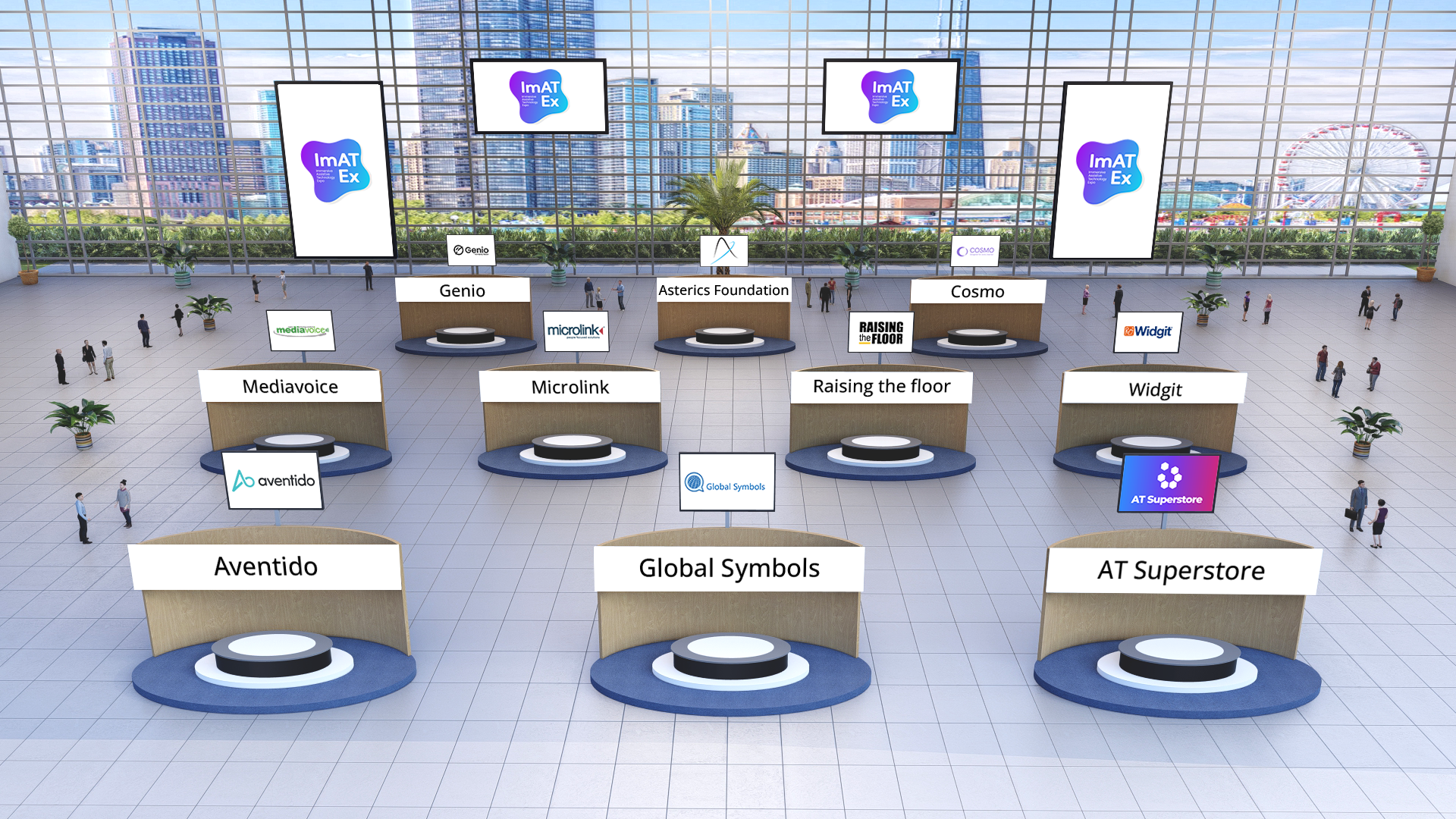
A place to set up and explore solutions from around the world.
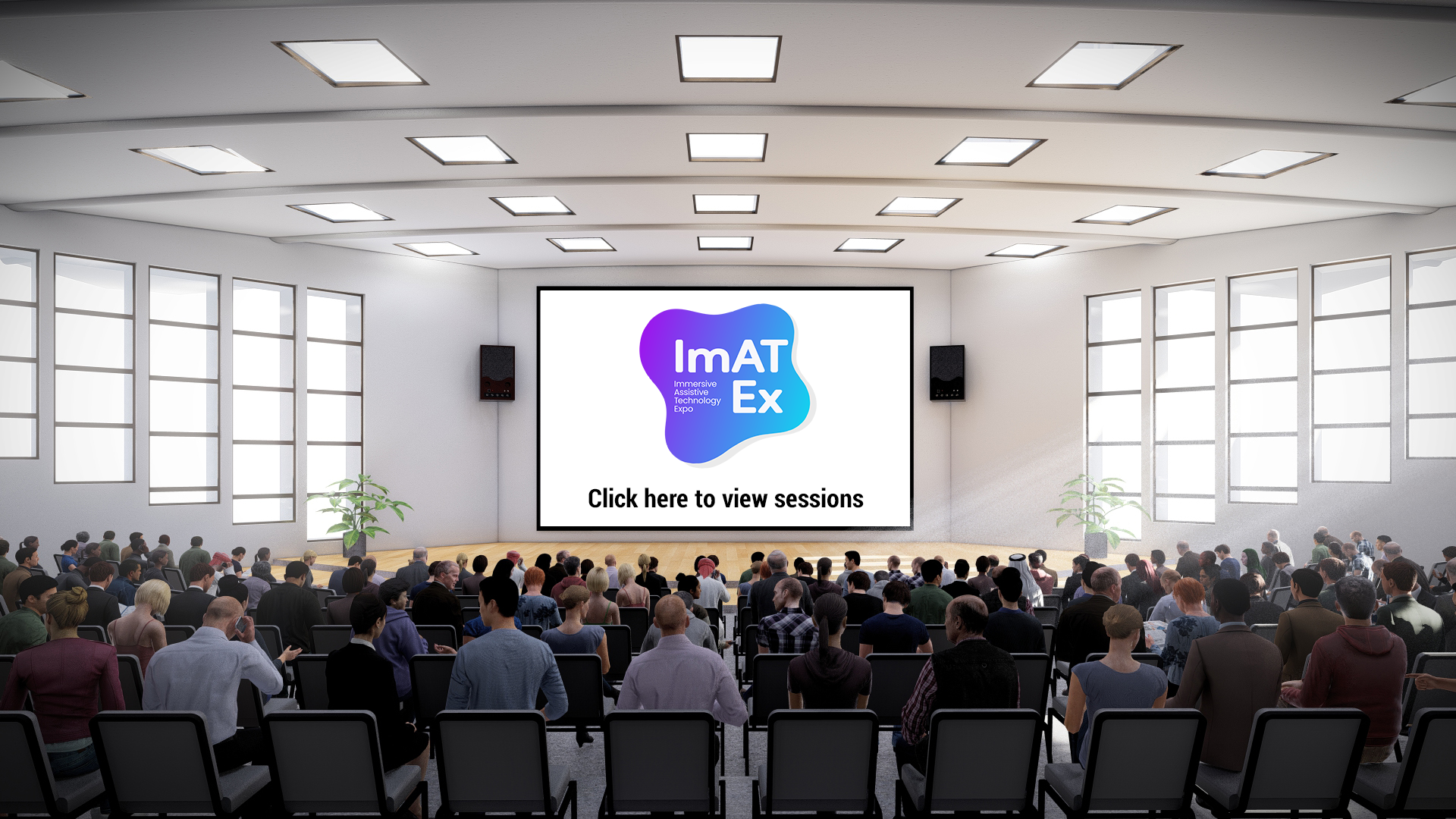
Join our guest speakers and other delegates for webinars and talks throughout the day.
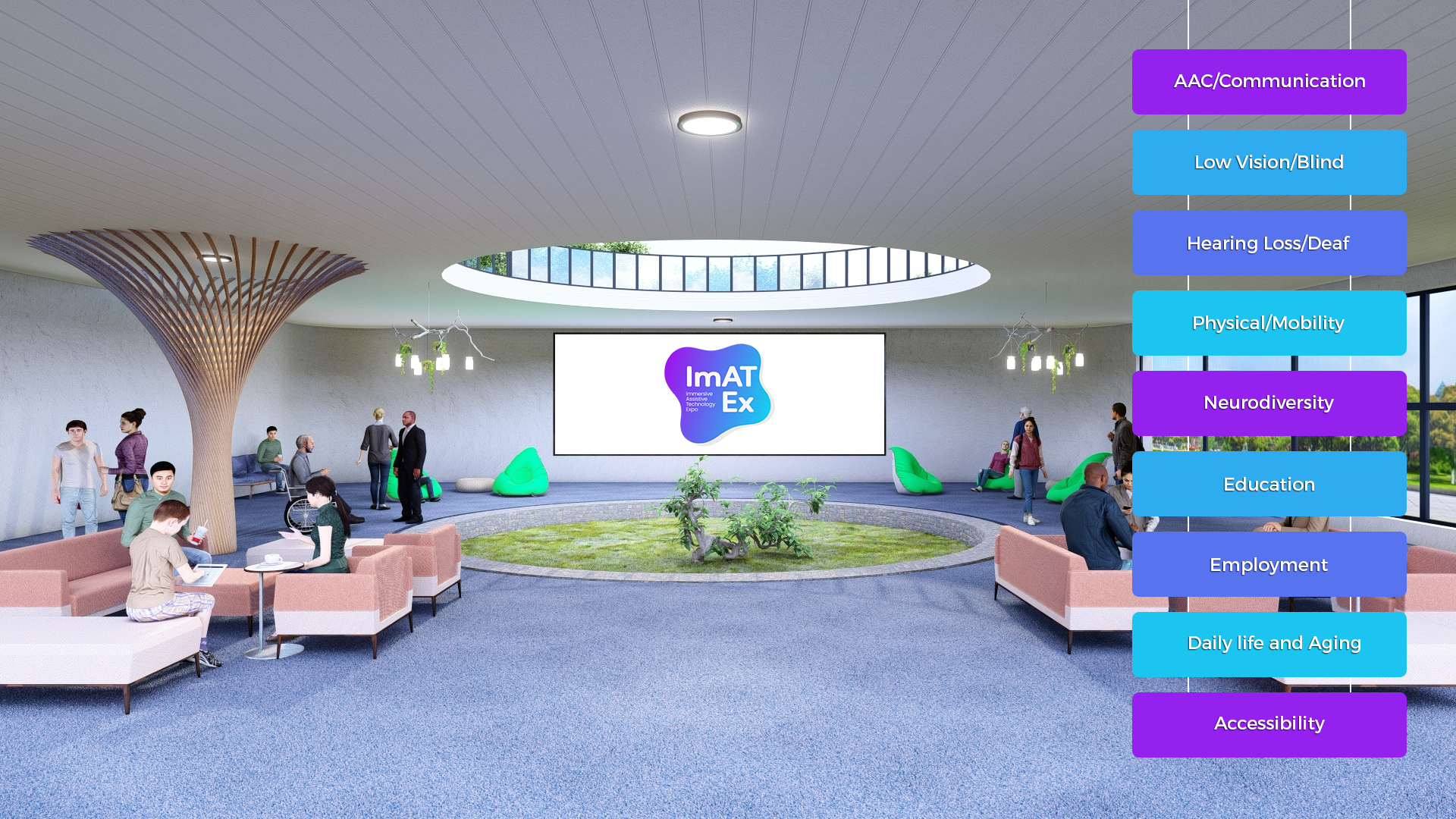
Join delegates and exhibitors in the networking lobby - open to all!
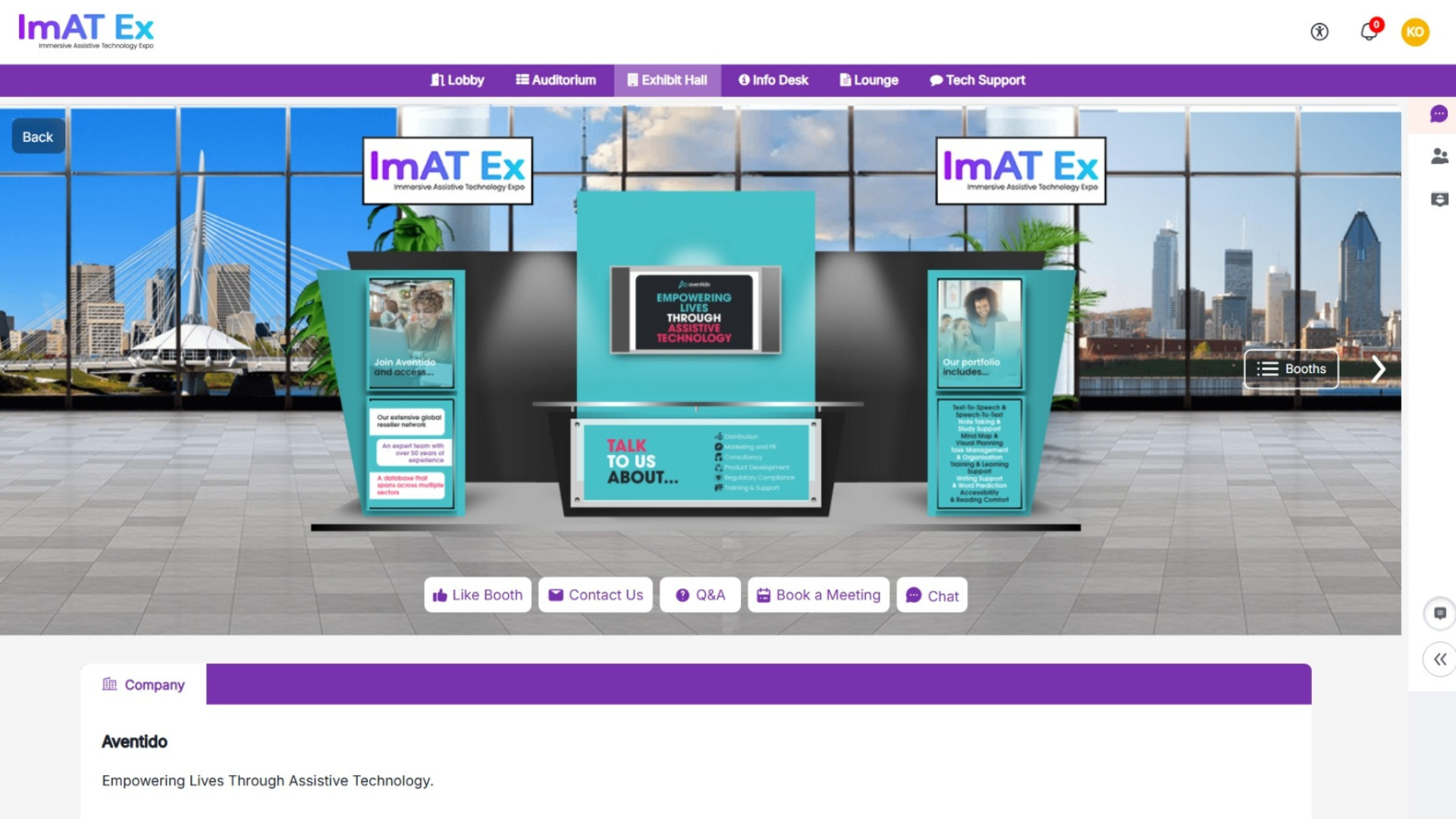
Build a booth perfect to showcase your company and solution.
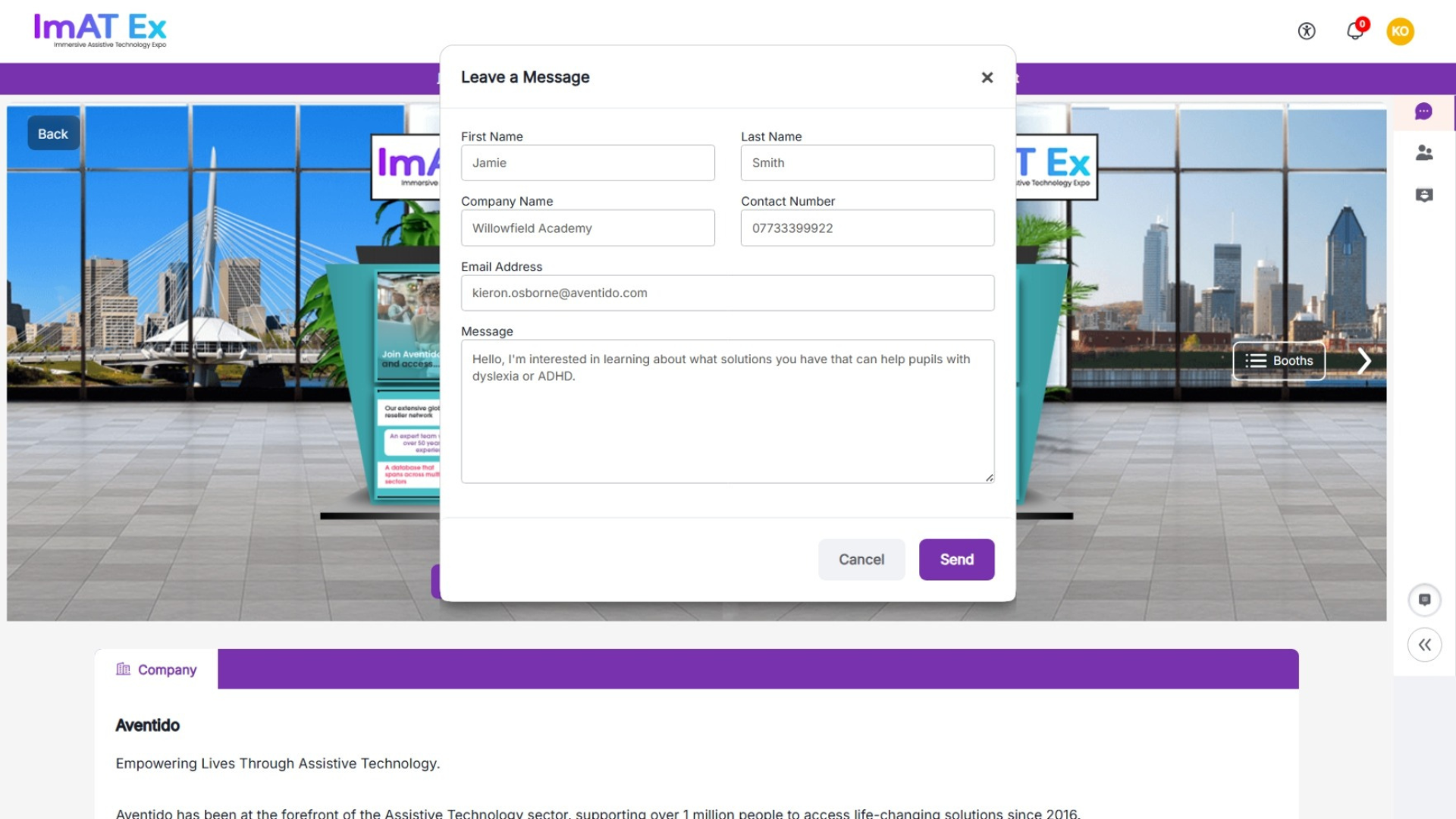
Delegates can leave you a message, allowing you to follow up later on.
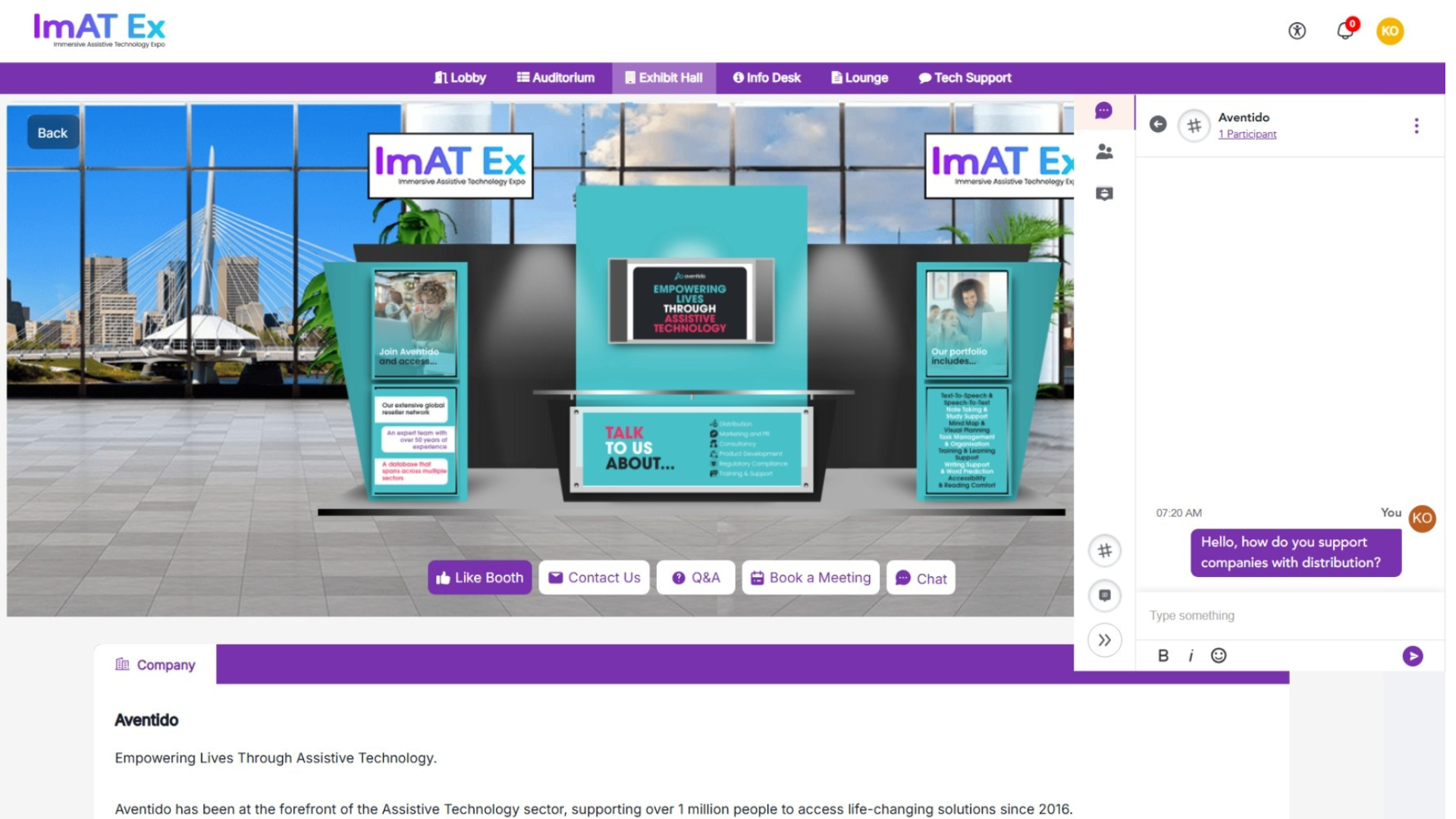
Start chatting with booths and delegates straight away with the live chat function.
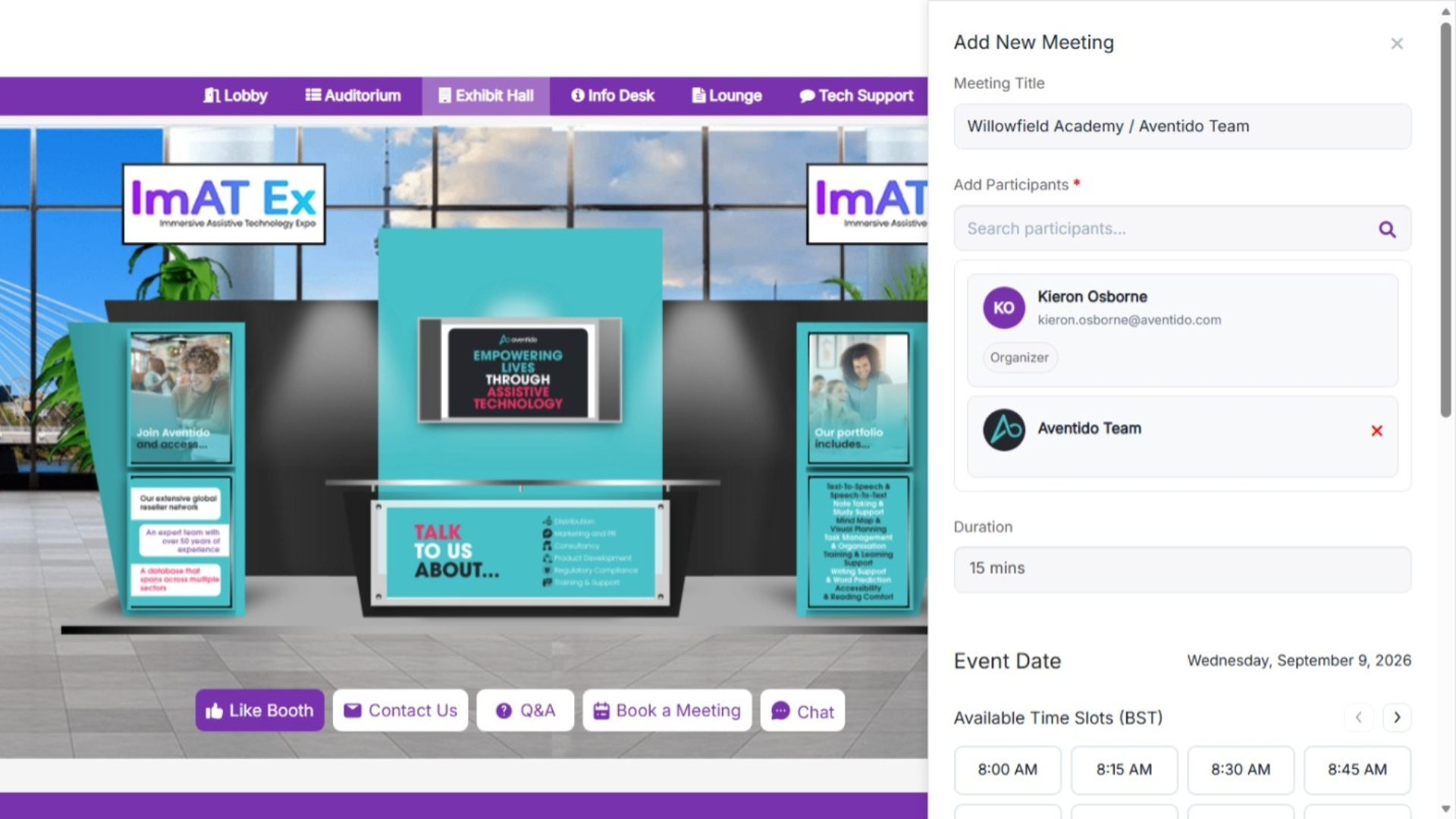
Delegates can book meetings with booth owners, finding times that work for both parties.
Network with professionals, developers and vendors with a shared interest in Assistive technology. You will have the chance to connect with industry leaders, experts, and professionals from across the globe, expanding your professional network and opening doors to discovering the very latest trends and opportunities in AT.
Our event is not just information; it's also about finding inspiration. Through our lightning talks and engaging with companies and organisations, we aim to ignite your creativity and passion for assistive technology for people with disabilities. You will leave our event feeling informed, motivated and energised to take on and address new challenges.
In a rapidly evolving world of assistive technologies, influenced by consumer technology, connectivity, and AI, we understand the importance of continuous learning to support people with disabilities most effectively. That's why we have carefully identified selected technologies, speakers and topics to cover a wide range of relevant and timely subjects.

Participate in ImATEx
ImATEx is the world's first fully virtual and Digital Assistive Technology Exhibition, offering a new way to engage with developers and vendors of assistive technology at the lowest possible cost and regardless of your location.
This conference is designed to inspire, inform and educate professionals, carers and people with a disability, providing them with valuable insights, resources and information to enhance their ability to make informed decisions about assistive technology that meets their needs.
Anyone, anywhere in the world, can participate in ImATEx and connect to the best minds in the AT industry. Don't miss this opportunity – register now to attend!

Exhibit at ImATEx
A booth at ImATEx isn’t a logo on a webpage – it’s an interactive showcase where you can present your products clearly and professionally, with videos, downloadable resources, product sheets, case studies, and links to trials or ordering routes.
Most importantly, ImATEx enables real-time interaction, so you can chat live with visitors, answer questions instantly, schedule demos, and move people from curiosity to confident decisions in one seamless experience.
'Virtual' also means efficiency. No shipping, no stand build, no travel budgets, no lost days on the road, just a smart, scalable way to meet the market. Your team can staff the booth from anywhere, coordinate handovers easily, and focus time on the conversations that matter.
You’ll also benefit from trackable engagement, helping you understand what visitors explored, what they downloaded, and where interest is strongest, so your follow-up is faster and more targeted.
ImATEx is ideal whether you’re launching something new, expanding into new regions, recruiting partners and resellers, or simply wanting to be present where people are actively looking for solutions. It’s a chance to demonstrate impact, build trust, and connect directly with the people who influence and make AT purchasing and provision decisions.
If you want a modern, accessible, high-value way to reach the AT community, book your booth at ImATEx and meet your next customers and collaborators in real time.